Showing posts with label review. Show all posts

04 March, 2015

Whodunit Actually Doesn't Matter: Reviewing The Connicle Curse by Gregory Harris

Hey everyone! I'm emerging from my wampa-cave for a review of a book I got an ARC of from NetGalley.  I was pretty excited by the reviews I'd read of this series, labeling it as what would happen if Holmes and Watson were romantically involved instead of just full of subtext. I was expecting banter, a good twisty mystery, and a decent dose of that lovely societally-induced repression that makes Victorian romances (especially queer ones) so delightful. Unfortunately I was mildly disappointed on all three counts, but it did give me a lot to think about. 

The narrator is Ethan Pruitt, the Watson to Colin Pendragon's Holmes. He has a sly sort of humor to him, but it was swallowed up by the massive amounts of angst he went through over the course of the book, as the mystery touched on some painful events in his past. Pendragon was clever, yes, but the ways in which he ordered Pruitt about in public fell short of the whimsical rudeness of Holmes and Watson. In the books and especially the 2009 movie, Watson's put-upon suffering is funny because it's intercut with moments of real emotion between the two-- but I never really felt that emotion between them, the weight of their long relationship and what they meant to each other, the way I wanted to. 

The mystery itself was rather muddled for me as well. At one point Pendragon complains that he can't make sense of the crimes that have been committed, and I felt rather the same way. There didn't seem to be any clear objective the murders were driving toward, there was a lot of misdirection and confusion, but not the kind that ramped up my own sense of urgency and curiosity. There was really no clear indication that the crimes had been committed by one person with a specific aim in mind, which is something I hadn't thought of as vital to a murder mystery until now.  Ultimately the reveal of whodunit packed no punch, because there'd been no foreshadowing and almost no development of the character in question beforehand. The final confrontation was decently done, but I thought the death unnecessary (though perhaps if I'd read the first two books I'd have cared more about the character?).

This was hardly a bad book, and I think it did a wonderful job of portraying queer characters in genre fiction without making the story all about them being queer. But the plot could have used tightening, and my lack of emotional connection to the characters made it fall flat. All of which has led me to think in depth about mysteries, and the careful amount of construction that goes into their creation.

Arguably, detective fiction is the only genre where the structure of the book is predicated on the characters setting aside their own personal goals, desires, and motivations, in favor of dedicating themselves to someone else's. At least nominally, a detective has to remain objective, at a distance from their cases, lest they lose their ability to think critically about how to solve them. Of course, the best mysteries are the ones where that objectivity is impossible to preserve-- consider Tana French's Dublin Murder Squad series, or Mulder and Scully's work on the X-Files, or Holmes when confronted with the work of Moriarty.

What's common in all these great mysteries is the sense of growing dread-- that while the case of the week may have started out as just another death or theft or unexplained phenomenon, the root of it is something intimately connected to the detective on an emotional level. And if the detective doesn't tread very carefully, the fallout will be not only the failure to solve the case, but a catastrophe for the detective on a personal level as well. In a good mystery, the arc of the plot is a success only if it unravels the detective's impartiality along with the explanation of how the deed was done. If the detective remains wholly outside the case, it's more an intellectual exercise than a story.

Which isn't to say every good mystery must drag the detective's inner demons out onto the page-- many of the shorter Holmes stories are more like long-form riddles than exposés into his character. But the genius of Doyle's work is that he intersperses longer stories that show Holmes and Watson as real, three-dimensional people, with shorter pieces that serve as funny or consternating palate cleansers in between. 

But in a novel, the reader spends a long swath of time with the characters, and keeping the detective at a remove from the case also serves to keep the reader at a remove from the detective. It's counterproductive if the author is trying to build tension and keep the reader invested in what happens. Because ultimately the solution to the problem is only important insofar as it is important to the people trying to solve it.  In Faithful Place by Tana French, we care if Frank catches Rosie's killer because Frank is driven like a madman to find out what happened to her-- without Mulder to remind us that aliens took his sister, we lose the sense of urgency that keeps us on the edge of our seats as he and Scully come this close, again and again, to finding the truth. 

Not to harp on Tana French (but if you like mysteries and you aren't reading Tana French, repair that oversight immediately) but her first book, In The Woods, is the perfect example. In that book, there are two mysteries that protagonist Rob Ryan and his partner Cassie are trying to solve: a murder that's just occurred, and the disappearance of Rob's two best friends back when he was a child. The two are linked from the outset, but in the end only one of them gets solved. We never know what happened to Rob's two friends-- and I'm totally okay with that, because I got enough emotional closure from the completed arc of the story and the solving of the modern murder, that I didn't need to know. I wanted to, of course, and so does Rob. But finding the facts matter far less than feeling the character has come full circle, and in that respect In The Woods tells a whole and complete story.

So, returning to The Connicle Curse. The driving emotional force in the book-- Pruitt's past experience with mental illness and the devastation it brought upon his family when he was a child-- didn't have much to do with uncovering the mastermind behind the murders. Pendragon was set up as Pruitt's emotional support system, and indeed we see Pruitt taking comfort from his partner a few times throughout the book. But the resolution of Mrs. Connicle's brush with institutionalization and Pruitt's ability to confront the horrors of his past didn't dovetail neatly enough with the resolution of the murders. The book played ping-pong with the two, never giving me a chance to really get emotionally invested in either storyline. 

In fact, reading this book and writing this post have reminded me that it's been a while since I last read a Tana French book. It might be time to pick up the next in the Dublin Murder series, and scratch the itch for a mystery I actually won't be able to put down.

You can see more of my book ratings at my Goodreads. The Connicle Curse is available for sale on Amazon.

22 January, 2015

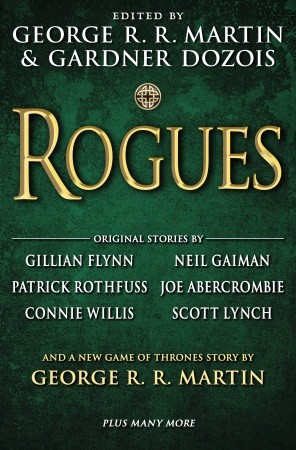
Scoundrel? I Like The Sound Of That: Reviewing the 'Rogues' Anthology

When I say I'm weak for a good heist story, I mean weak. Ocean's Eleven, Locke Lamora, Holly Black's Curse Workers trilogy, The Sting, the list goes on. Give me a person (or, preferably, a group of people) robbing some rich asshole blind and having a snarky fantastic time while doing it, and I'll eat it up like candy.

Greg Van Eekhout wrote a great blog last summer about the magic involved in a successful heist, and he's right-- there is something irresistible about that sleight-of-hand smile-at-me-while-my-partner-steals-your-wallet kind of character. As it turns out, George R. R. Martin feels the same way, and so he went about assembling a collection of stories all featuring rogues in one form or another. As with any anthology, this was a bit of a mixed bag, with some stories sticking more successfully to the theme than others. I've briefly reviewed each story in terms of its relevance to the theme, and its overall awesomeness, below the cut.

03 September, 2014

Fuck the Higher Bird: A Review of 'Yoga Bitch' by Suzanne Morrison

More often than not on this blog, I've reviewed genre fiction-- that is, sci-fi or fantasy or something other than straight-up "literary" fiction. What I've never done is review nonfiction, simply because I don't, as a rule, read nonfiction. David Sedaris notwithstanding, my experience with other people's memoirs has more often than not been an exercise in eyerolling at the self-aggrandizing navel-gazing contained therein. Memoir is what people write when they think they're more special than they are.

When I went to the AWP conference in Seattle this past February, I went to a panel about book reviews where the editors of several review publications offered advice on how to make reviews pop. The best piece of advice I got was that a review shouldn't be a summary of the events of a book-- it should frame the book in context. Simply laying out the events of the book isn't enough; you can get that by going to Amazon. A good review tells a reader not if the book is good or bad, but why it's relevant.

It was also at AWP that I, on a whim, attended a panel on humor in memoir, and got to hear Suzanne Morrison read from her book Yoga Bitch. When I tell you I laughed so hard I cried, I'm not exaggerating. Her sarcasm, her unflinching honesty about her own inner failings, and most of all, the unbelievable story of a group full of grown adults who willingly drink their own pee, had me hooked.

30 July, 2014

'Ghosts of Tupelo Landing' by Sheila Turnage

Starting the sequel to a book I loved is always a bit of a risk. But it was one that paid off with Sheila Turnage's Ghosts of Tupelo Landing, the sequel to last year's sidesplitting Three Times Lucky. Despite the volume of books I read, there are few that can make me laugh out loud without a care for how many funny looks I'm getting from commuters or coworkers around me. But like its predecessor, Ghosts of Tupelo Landing had me chortling on the regular. Mo's voice is so strong, and the humor comes in many flavors, from the bait-and-switch ("Connoisseur", I whispered. "French for 'know-it-all.'") to rueful self-deprecation (The problem with having a temper is you find out what you're going to say at the same time everyone else does.). I can't help but recognize a bit of the fiery troublemaking kid I was in Mo, but even if I didn't have that soft spot, I'd still be laughing my ass off.

I trusted Turnage not to try to "one-up" the plot of the first book (one of my biggest peeves about mystery series) and she didn't disappoint. This time instead of a murderer on the loose, the real threat is to the livelihood of Mo's nearest and dearest, and in a way she can't fix just by figuring out whodunit. This is only tangentially a ghost story, with the title referring more to the shades of the town's past than to the actual ghost Mo and Dale are chasing. The overall feel of the book is of things coming full circle-- an out of town boy coming back to live with his grandfather, schoolchildren learning about their town's history by interviewing their elders, a historic building given new life through the town's collective effort. It's a deft way to frame the characters' development as they take on bigger challenges, both practical and personal.

Change is a common theme in middle-grade fiction, as most of its readers are already hurtling into adolescence at breakneck speed. Mo is growing and changing-- it's no coincidence that for the first time we see her in school-- and the scope of her world is growing too, as she turns her outward "Upstream Mother" focus inward to the people around her, and her place among them. The mystery was harder to solve, too, as it involved navigating the often confusing world of adult emotions and motivations. But Mo's facility for people (and for bullshitting her way out of sticky situations) helps her hold her own against bitter bootleggers and grouchy grannies alike, keeping the story moving constantly forward.

But the biggest strength of this book is in its unquestioning acceptance of Mo's experiences, and how it refuses to compromise her agency as the storyteller. Whether or not the ghost of Nellie Blake is "real" is never even brought up-- Mo experiences her as real, and therefore so do we, the readers. It's part of what makes Mo such a great narrator and such a strong character-- her world is the world we live in while we're with her, and it's a colorful explosion that doesn't step outside itself for a moment. Turnage has said that when she first sat down to write Three Times Lucky, Mo emerged almost fully formed, her voice clear and distinct, and that solidity certainly translates to my experience as a reader. If only all characters-- especially all female characters-- were as complete in their humanity as Mo LoBeau.

I'm assuming Turnage will be putting out another sequel soon, only because I can't imagine saying goodbye to a character and a place I've come to adore so much after only two books. People often deride adults who read children's books (James Wood's recent invective, quoted here, springs to mind), but whatever your age, Ghosts of Tupelo Landing gets my full-throated recommendation to anyone who likes good writing or is in need of a good laugh.

Overall rating: 4.5/5 stars (rounded up to 5 for how much it made me laugh)
Geek quotient: 2/5 stars
Girl quotient: 5/5 stars
Gay quotient: 2/5 stars (Mo has a gay "uncle" who's a very positive role model in her life- normally I wouldn't give this two stars, but in a book for this age group it gets more weight.)

17 June, 2014

"Prince of Thorns" by Mark Lawrence

With no ado at all, I'm back! Shit's been crazy; I'm finally reading again, at last.

So, Prince of Thorns by Mark Lawrence. I have really mixed feelings about this book-- I'd been really excited to read it, but when I got into it I just... couldn't get into it.

A synopsis: When he was nine, Prince Honorous Jorg Ancrath watched as his brother was murdered and his mother raped and then murdered by villainous Count Renar's men. His father the king is a neglectful vicious jerk who refused to enact vengeance upon Renar in favor of using the murders as leverage to bargain a profitable trade agreement with him. Furious and betrayed, Jorg peaces out of home at age ten, and collects-slash-joins a bunch of thugs who then pillage their way across a bunch of kingdoms under his command, all with the ultimate goal of vengeance upon Renar and overthrowing his father to take the throne of Ancrath for his own. But there's more at play than just bloodlust; the Hundred Kingdoms are at war, and the closer Jorg gets to understanding how to win it, the more he starts to realize he has no idea what he's up against.

22 January, 2014

'Company of Liars' by Karen Maitland

'Company of Liars' by Karen Maitland
Hey everyone, happy 2014! It's good to be back. I hope all of your holidays were merry and bright and full of good books. I've missed blogging-- to be fair, I didn't end up reading a whole lot in December that I could've blogged about anyway, but even still, it's good to be back in the saddle.

I'm really excited about this post, because I've been looking forward to reading (and reviewing) this book literally for months. Company of Liars by Karen Maitland, whose back cover describes it as a reimagining of the Canterbury Tales.

Bear with me through a brief history lesson, which I'll start with a confession: my focus in college was Old and Middle English literature. And I am a giant, embarrassing, drooling Chaucer fangirl. I'm not only talking about the one played by Paul Bettany, either. Chaucer was the man. He was one of the first writers to decide that he'd had enough of this "real literature is only written in French and Latin" crap, and wrote in the vernacular that actual regular English people spoke on a daily basis. He's credited with starting the legitimizing of English as a language good for anything besides singing dirty songs in bars or figuring out how many bales of wheat to trade for a sheep.

While he wrote a bunch of other works, he's most famous for the Tales, which live at the crossroads of sociopolitical commentary and self-insertionist fanfic. The narrator of the Tales is a guy named (you guessed it) Chaucer, and though the poet himself isn't on record as ever deciding to go on a pilgrimage, he used his vast experience of people from all walks of life to create a bunch of believable characters-- archetypes if you will, of the sorts of people that most English people would know-- a nun, a priest, a miller, an innkeeper, et cetera. Though they came from all occupations and classes, the pilgrims all thought that going on this holy road trip would absolve them of their sins. In some cases, Chaucer found this ironic and hilarious; in others, noble and commendable. It all depended on the person. Further setting the Tales apart from most literature of the time, there's no one main hero in this story, just regular people, and Chaucer immortalized every one of them, quirks, warts, farts, and all.

So-- back to 2013, and Company of Liars. The narrator of the book is called Camelot, not a name but a title, held by an old scarred man who sells useless trinkets claiming them to be holy relics. Rumors of the pestilence (the early name for the Black Death) have been circulating, and Camelot is trying to make it to a shrine to spend the winter in. Unfortunately for him, he keeps meeting people who he feels compelled to allow to join him, for their safety as well as his own-- a young couple expecting a baby, an albino child who reads the future in runes, a midwife, a musician and his apprentice, a one-armed storyteller, and a sideshow operator with a wagon full of marvels.

As the title of the book would suggest, all of these people are liars. And between the incessant downpour, the lack of food, the growing stories about the plague, and the growing tensions between various members of the group, it becomes clear pretty early on that something's going to go FUBAR in this medieval station wagon-- the only question is when. The fact that there's a lone wolf that seems to be following their caravan-- hunting them, even-- only adds to the fear. Then, one by one, the members of their company start dying in increasingly gruesome ways.

This is the point at which it becomes clear, both to our narrator Camelot and to the reader, that whatever is preying on the travelers (be it wolf or human) isn't doing so at random-- that rather than being absolved of their sins as Chaucer's pilgrims hoped for, they're being punished for them instead.

This is the part where we get spoilery, so if you want to remain in the dark about whodunit, now's the time to stop reading.

Still with me? Okay, good. Because we're going to have a chat, you and me, about creepy children.

Nope, this town is totally normal.
The creepy kid trope (don't click that) is often used as a mini deus ex machina, not to solve the problems of a particular story, but to expose them. The idea of a child that knows too much is unsettling-- a child that can think like an adult, and worse, perpetrate evil or horrifying acts like an adult, is one of the creepiest there is. Even if the creepy kid's job is just to stand by and make ominous pronouncements about what's going to happen, it's still unsettling. Kids are supposed to be innocent, and when faced with one who isn't, it jolts us out of our comfort zone faster than you can say Linda Blair.

So if your book contains an albino 12-year-old with a long white rat's nest of hair and pale eyes who barely talks except to read runes and make cryptic statements about the people around her, I just go into it assuming she's one early bedtime away from going Lizzie Borden on everyone around her. Add to that the fact that the pregnant lady gives her a doll and she scratches its face off with a knife because she doesn't like it looking at her, and that she's crazy good at hunting but takes ages to actually kill her prey because she likes watching the animals struggle? RED ALERT EVERYONE, THIS IS NOT A DRILL.

So while I may have called it pretty early on that Narigorm (which is a near-anagram for guess which Celtic goddess whose abilities include foretelling the means of a person's death?) was behind the wolf hunting and shredding Camelot's companions, no one in the book seems to figure it out, even as the body count rises.

Which is kind of the point, if you think about it. The best and scariest killers are the ones who do their dirty work right under others' noses and get away without suspicion (hello, Doctor Lecter). And who would suspect a child of murder? As Camelot finds out to his great chagrin, people don't want to even consider the possibility, even when it's standing there telling them in a sepulchral voice that the runes say someone's going to die less than 12 hours before one of their group turns up stabbed to death with his man-bits torn off.

I should also mention this book is not for people who are squeamish about blood.

Anyway-- one of the funniest parts of the Canterbury Tales is how Chaucer exposes the divide (in some cases, the chasm) between how the pilgrims think of themselves, and what their actions actually say about them. also In Company of Liars this theme is just as important, but it's used for horror, not humor. Each of the people in the group either has secrets of their own or is hiding someone else's, or both. They have a facade that they're desperately trying to maintain, and the growing dread that mounts with each chapter mirrors the characters' growing realization that those secrets won't stay buried for long. So reading Company of Liars is like traveling this double spiral of horror-- not only the realization that Narigorm is a practiced murderer who assembled this company on purpose to torment them, but that no one in is safe while they're with her.

It seems strange to say about a book about a road trip, but Narigorm is the only thing that moves the plot along. Without her, the travelers would be content to keep living their lies, and would probably have finished their journey in ignorant peace, but she is always nudging them toward exposure. And while she as a character may be motivated to kill, her function in the story is to bring about that unearthing of the truth. She reveals how fucked up each one of these people is-- proves to them that the truth cannot stay hidden no matter how desperately they wish it-- and then punishes them for their sins.

Strangely, she fulfills the same function for the book's travelers as the Narrator does in the Canterbury Tales. In this perverted, horrific reimagining of the Tales, Narigorm plays the part of Chaucer, pulling back the veil on the secret lives of the people around her and meting out retribution-- not by immortalizing their flaws in fiction, but by reminding them how worthless their lies, and their lives, really are.

This makes the book sound bleak, but for all that it hasn't got a happy ending for almost any of its characters, I found it very satisfying. Maitland has a beautiful writing style and she paints emotion and atmosphere with a vivid brush. I was totally captivated by this story; each chapter was something to savor and linger over, and I was thoroughly sorry to turn the last page.

You can buy Company of Liars on Amazon, and read my reviews crossposted to Goodreads

30 September, 2013

An immortal wizard walks into the World Series of Poker... : "The Incrementalists" by Steven Brust and Skyler White

It sounds like the setup to a bad joke. A guy sits alone in a bar in Vegas, waiting for his next poker game to start. He flirts with the waitress, has a drink, thinks about the fact that his ex-girlfriend recently committed suicide; nothing really to set him apart from the sludge of humanity around him. But underneath his baseball cap sits a mind that's been reincarnated through dozens of bodies over the course of many centuries-- a mind that remembers every era of history and every time he used his magic to change things for the better. And the best part is, our wizard isn't alone. He's got 200 friends just like him-- a secret society who's been magically nudging people toward working for the greater good, operating between the lines since the dawn of time. This is the premise of Steven Brust and Skyler White's The Incrementalists-- the foundation for a story that is simultaneously fantastical and everyday, mixing magic both wondrous and mundane. 

25 September, 2013

Punch-Drunk and in a Funk: 'Crux' by Ramez Naam

The year is 2040, and the latest drug to hit the streets is Nexus, a bionic enhancement that allows human brains to network like computers. Kade, Rangan, Ilya and Watson are the geniuses behind the newest upgrade, and they're living like kings-- until a secret branch of the government sends an agent to shut them down. You can read all about that in Nexus, the first book in Ramez Naam's cyberpunk trilogy; this review deals with the sequel, Crux, which finds two of our hacker friends dead, one imprisoned, the other on the run for his life, and the government agent who started it all working against her former employer just as hard as the hackers she once tried to subdue. Throw in a few guys with ties to shady government agencies, some terrorists, some freedom fighters, and some people who are some or all of those things at once, and you've got a recipe for a whirlwind of a book that, unfortunately, came out sort of half-baked.

10 September, 2013

'A Thousand Perfect Things' by Kay Kenyon

Hey everyone, sorry for my absence the past few weeks-- I went on vacation and then started a new job, and it's taken me until now to get my blogging brain stuffed back inside my head. :)

I'm returning with a review of A Thousand Perfect Things by Kay Kenyon. I want to start by saying that this book surprised me. I've never read anything by Kay Kenyon before, so when I got the ARC of her newest book I didn't know what to expect, and my reaction was mixed.

Like a lot of books, I started it on the train on my way to work, which made it really awkward when I started crying less than twenty pages in. So, something I haven't talked about here is that my grandfather passed away in July, at age 85 and after a long battle with heart and lung disease. We were very close; I'm still trying to metabolize the fact that he's gone, and I'm pretty sure I'll be trying for a long time to come. So reading about our protagonist Tori and her bond with her grandfather was a wrench-- even more so when Sir Charles takes sick and dies (the part that had me in tears-- good work, Ms. Kenyon), leaving behind a family who thought he was crazy, and an idea that consumes Tori's focus and is the basis for the entire story to come.


15 August, 2013

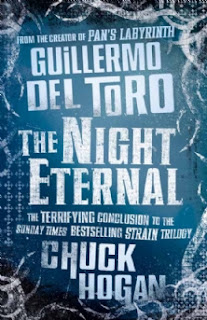
The Strain Trilogy by Guillermo del Toro and Chuck Hogan

So it's been a little while since I read Guillermo del Toro's The Strain and The Fall, but after finishing The Night Eternal I had to go back and do a little brush-up to see if I was remembering them accurately. I'd rated The Strain four stars on Goodreads, its successor three, which are solid ratings that mostly held up under a second scrutiny. I had high hopes for The Night Eternal, but sadly it didn't live up to the hype, and forced me to reassess my rating of the entire series.

It starts off so promisingly, too. The Strain was touted upon its release as "the book that makes vampires scary again", a bounceback from the supposed decline the neckbiters have been on since Bela Lugosi first donned an opera cape. And while I agree that the Cullens, Salvatores, Spikes and Erics of the pop culture world haven't been balanced out by an appreciable weight of run-for-your-fucking-life scary vamps, Del Toro and Hogan sought to tip the scales and ended up overbalancing them. As the series goes on the emphasis is very much on quantity rather than quality-- the characters devolve into predictable tropes; the plot gets bogged down in sidetracks that are boring, transparent or both; and the lion's share of the work seems to have gone into describing battles in as much cinematic detail as possible rather than giving any emotional weight to the characters' development. It is possible to have scary vampires and still tell a good story, and I'm going to point out the main areas where I think GDT and CH went off the rails.

02 August, 2013

'Casino Royale' by Ian Fleming


I was in middle school the first time I saw a James Bond movie. My brother and I were hanging out at our grandparents' house on New Year's Eve and some network had on a marathon. "For Your Eyes Only" was, to my twelve-year-old brain, a feast. Dramatic, suspenseful, ridiculous, full of explosions and just enough sex to get all my hormones and adrenaline fizzing at once. I was enthralled, not only by the spectacle, but by the character of Bond-- this dashing rake who charmed his way into opium warehouses and ladies' ski suits with equal felicity, fought bad guys while running, driving or rock climbing, prevented the sabotage of the British navy and looked great doing all of it.

In that light, maybe it's weird that I'm only just now digging into his source material-- starting, of course, at the beginning. Casino Royale happens to be one of my favorite Bond movies, so I was excited to sink my teeth into the superspy's origin story. As much for my own self-analysis as anything else, I was curious to investigate the source of Bond's popularity. What is so engaging about this man, this figure, that he's managed to occupy a significant place in our cultural consciousness for over half a century? Based just on Casino Royale, at least, the sad fact is that I have no idea.

29 July, 2013

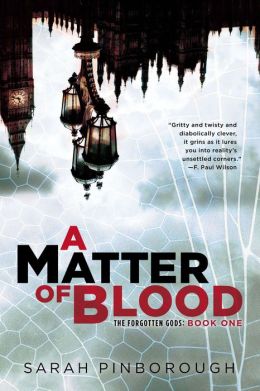
'A Matter of Blood' by Sarah Pinborough

Sidebar question : the series is called The Forgotten Gods in the US and The Dog-Faced Gods in the UK. Which do you like better?
The opening act of Sarah Pinborough's urban fantasy horror trilogy is dark. It's gory, it's harsh and unflinching in its descriptions of an ugly world; no romps with city-dwelling fairies here. It's urban fantasy at its most brutal, illuminating a bleak potential future where-- as our killer makes a habit of pointing out-- nothing is sacred. It's that idea of the sacrosanct that winds its way throughout the book, touching each of the characters in turn, leading the jaded Detective Jones to a thorough examination of not only the ways in which his society is broken, but in which he is as well.

22 July, 2013

'Doll Bones' by Holly Black

Still working on my review of Sarah Pinborough's A Matter of Blood, but I finished Doll Bones this morning and couldn't stop myself from writing about it instantly.

25 June, 2013

'Bronze Gods' by A. A. Aguirre

So, in complete contrast to my reaction to Fade to Black, Bronze Gods surprised me by how much I loved it. I won't say I didn't expect to enjoy myself, because a crime fighting team in a steampunk universe with magic sounds like bona fide enjoyment material in my book. But I expected fluff-- a quick read, nothing heavy. I was pleasantly surprised to discover instead a wholly engaging read with characters that leapt off the page and a world I wanted to explore every nook and cranny of.

14 June, 2013

Fade to Black (Rojan Dizon #1) by Francis Knight

Holy funemployment, Batman, two in one week! 

So I hope that whoever wrote the jacket copy for Fade to Black has their own publishing deal, because they did a great job. Based on a quick scan, the book sounded edgy, dangerous and exciting. It was featured on bn.com the week I bought my new nook, and I was SO close to paying for it... But, luckily for me, I borrowed it from a friend first. It turns out I would've been pretty mad had I shelled out money for it. 

The book isn't terrible, and there are some aspects of it that are great-- okay, actually, I take that back, there is one aspect of it that is great, and that is the worldbuilding. The city felt real, the descriptions vivid even when they weren't overly verbose, and the atmosphere thick enough to taste. It's clear that Francis Knight put a lot of thought into her world, that she knows it well down to the small details. But it's useless to have a great world if you don't populate it with great characters, and in that Knight failed pretty spectacularly.

There are three main characters in the book-- the protagonist, bounty hunter and pain mage Rojan; the girl swordfighter Jake; and her best friend / would-be lover Pasha. Pasha is easily the most interesting of the three. He's a pain mage like Rojan, with a painful past-- he was sold into slavery to be used as fodder for another pain mage's power and endured years of constant abuse, all when he was mostly a kid. He's in love with Jake, but she's got the same past trauma that manifests in a deep aversion to being touched, therefore taking intimacy of any kind off the table. He sticks by her because it's their secret mission to find other people who've been sold to the mages (like Rojan's niece, which is what crosses his path with theirs) and get them to freedom. He's pretty badass and bold when it comes to acting on behalf of others, but emotionally passive when it comes to himself; a nice duality. He got flatter and more predictable as the book went on, but he was the only one who made me feel any real sympathy.

Jake has all the trappings of an interesting powerful female, but unfortunately she isn't any of those things. She's a statue on a pedestal to Rojan, not a person. Some reviewers have compared this construct to the archetypes found in classic noir, but that's not a comparison I can get behind. She's certainly no femme fatale, and while it seems Knight intended for her to play the part of the elusive ice queen who gets under the private eye's skin, she misses the mark. She doesn't need Rojan's help, so there's no give and take in their relationship, and she's so closed off emotionally that most of Rojan's response to her seemed to be based on physical attraction-- which is fine, but isn't a carrier for the intrigue and emotional desire Rojan claimed to feel for her.


But my real problem with Jake is that Knight had a great opportunity to paint the picture of a strong, independent woman who had overcome adversity to take control over her life, and didn't. Jake is a pit fighter, really strong and agile, and she's a subversive freedom fighter working behind the scenes to go against the rule of law. But in the moments I most wanted her to shine, she caved. Pasha kills a man so Jake doesn't have to (she's very proud of her no-kill record in the pits) and she drives him away, a disproportionate response that's clearly a device to get her and Rojan alone, and one that makes her look unreasonable and unstable. 


Then, in spite of her explicitly stated aversion to touch, Rojan kisses her and she doesn't even fight back. Instead it's like an eye-opener-- oh, I really was fine with making out all this time, who knew? Probably pretty disturbing to read if you're a survivor of that kind of abuse. And the icing on the disappointment cake was that she never overcame her fear and got back at the man who enslaved her. Instead, another clumsy plot device had Rojan step in to do it for her. I liked Jake alright, but she didn't grab me either as a heroine or as a love interest, and in terms of the power and agency of women in the book she left a lot to be desired.

She got a really kick-ass entrance, though, I'll say that much.


And Rojan. Oh, Rojan. I can't decide if this is how the author thinks jaded and world-weary men actually think and talk, or if she personally knows someone who's simultaneously this misogynistic and this boring, but either way, he doesn't play well. He hovers in this limbo between actually being a womanizing sleazebag and only pretending to be one-- it's like the author wanted to make him unlikable and have a bad attitude towards women, but didn't have the stomach to take it all the way. He isn't like Barney Stinson or Han Solo-- I never once bought the image of Rojan as a cad who treats women like they're disposable because he's afraid of emotional intimacy. The book opens with him getting notes from the three women he's seeing who've all just found out about each other and trash his apartment for it, and he talks a lot-- incessantly-- about how bad he is at relationships, how much of a womanizer he is, etc. But we never meet any of the girlfriends, or even see first-hand what they do to his apartment, so there are no consequences for his jerk behavior. There's never even a hint of the fact that he might want something more out of relationships, just more casual contempt for the idea of them.


All this means that when Jake finally appears on the scene and Rojan suddenly starts spouting off about how much he likes her and how she makes him want to be a better man, the intended revelation falls extremely flat. Because Jake isn't as well rounded as I'd like, and certainly neither is Rojan, I didn't feel the supposed connection between them at all. The author kept talking about it, but it never grabbed me in the gut. Especially when contrasted with Mikani and Ritsuko in Bronze Gods (which I'll be reviewing next), who had chemistry and tension enough to drive me to drink, I felt like both Rojan and the author were just going through the motions of the typical transformative falling-in-love experience, rather than actually... well... experiencing it.


I didn't completely hate this book. It was a quick read and it wasn't the worst urban fantasy I've ever read. But it disappointed me so much in relation to my expectations that it left a sour taste in my mouth. Ultimately I wanted the author to delve into Rojan's actual weaknesses-- his fears, his self doubts, his shitty relationship with his brother (which is the only arena in which I really felt sympathy with him), his dead mother-- instead of having them all glossed over and then neatly tied up at the end. I'm not even sure how the author plans to make a sequel happen, since so many of the problems were resolved by the end of the book. Hopefully the next one won't give such token nods to Rojan's issues, and will have a supporting cast that's a lot more fleshed out. Unfortunately, unless it's recommended to me by someone I trust, I won't be taking the time to find out.


12 June, 2013

Dark Triumph by Robin LaFevers

So, what's a little ridiculous about this is that I actually read an advance copy of this book in March and had the review ready to go at the time the book was released, which was mid April. And then real life interfered in a big three-strikes-you're-out sort of way, and I sort of forgot about the internet for awhile. SO. Here, at long last, is my review of Dark Triumph by Robin LaFevers. It's a bit shorter than my last few have been, because as it's probably clear I'm still struggling with posting more frequently here, I'm going to try a few shorter reviews in the hopes that they'll go faster.

05 March, 2013

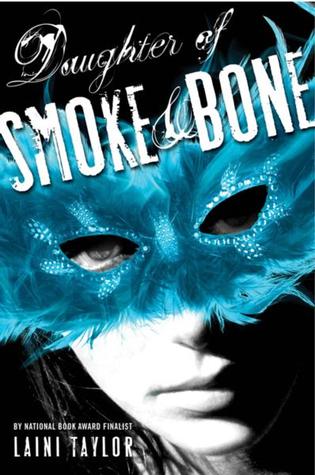
'Daughter of Smoke and Bone' by Laini Taylor


For my first review back from what was, admittedly, a hiatus that stretched the meaning of the word past its breaking point, I wanted to come back with a bang. And Daughter of Smoke and Bone is nothing if not full of bang.

10 February, 2012

'Hounded', 'Hexed' and 'Hammered' by Kevin Hearne

Normally I would split these books up into three posts, one review for each. But they fit together so seamlessly that it felt like one long book-- one long, action packed, deeply awesome book-- so I'm going to review them all together.

Let me start by saying that I downloaded these books onto my Nook on a whim. A friend of mine had praised them highly on her Goodreads page, and I thought hey, why not. It was a wise move; once I started I was hooked. The trilogy stars Atticus O'Sullivan, the last Druid on Earth, who looks like a twenty-year-old college kid but is really over two thousand years old. He's living under cover, owning and managing an occult bookstore/tea shop combo in Arizona, hanging out with an old Irish widow who lives nearby, flirting with the cute bartender at the local pub. On the surface it seems like he's living a totally normal life. Except for the part where he gets visited by the Irish goddess of Death, his lawyer is a Viking vampire who accepts payment in goblets of blood, and oh yeah, his dog can talk to him-- in his mind.

26 January, 2012

'Sweetly' by Jackson Pearce

Like its predecessor Sisters Red, Sweetly is a story we know inside and out, modernized and retold. Jackson Pearce has taken a classic fairy tale-- in this case, Hansel and Gretel-- and cut it open, messed around with its insides, and sewn it back up again. The story looks the same, and the bones of it haven't changed, but almost everything else about it has-- in my opinion, for the better.

11 January, 2012

'Bloodsucking Fiends' by Christopher Moore

Happy New Year, everyone!

So I said I was going to review "Treasure Island!!!" by Sara Levine, but I changed my mind. It was a fast and funny read, but the more I write these reviews the more I feel compelled to focus this blog on sci-fi and fantasy books, of which Levine's was not one. It was funny, but painfully so, a bit like if Kimmy Gibler had a cameo on an episode of Arrested Development : awkward and ridiculous, each interchange leaving me unsure if I was supposed to laugh or cringe, or both. I liked it, but it didn't wow me. (Sidebar-- the fact that most, if not all, kids who are graduating from high school this year have no idea who Kimmy Gibler is, is a tragedy of epic proportions. Discuss in comments.)

Moving on: I picked up Bloodsucking Fiends at last, after it sat on my shelf for almost a year, staring me down. I was expecting a quick read with a lot of laughs, and I wasn't disappointed. But I wasn't expecting the commentary, the intelligence in the humor, or how the book turned the romanticizing of vampires on its ear.