08 January, 2015

Disney made a mistake, but Emily Asher-Perrin didn't.

Earlier this week over on tor.com, Emily Asher-Perrin posted a thoughtful and, I thought, pretty spot on analysis of what Tangled, Brave, and Frozen all got wrong-- namely, that while they have female protagonists, they completely lack any female supporting cast, up to and including the animal sidekicks.

I know we're not supposed to read the comments, but I did. And after a lot of eyerolling, I came across one commenter who sparked a reply in me, which I'd like to expand on here.

The commenter wrote:
...why single out these three films when this happens EVERYWHERE. The critique really should be why does this happen (and everywhere, not just three Disney films, as in this essay here): one of the biggest selling genre series was written by a woman and it's a pretty white, male, heterosexual magical and muggle world that she's depicted.

And hey, that's not a bad question. Why target Disney, when this issue is disgustingly rampant and, let's face it, kids' movies are not even close to the majority of films that get produced in the US on a yearly basis?

It all comes down to how we critique, how we begin to frame the conversation. As I replied to that Tor commenter, an examination of the relegation of women to nameless windowdressing in all Disney films would be a dissertation, not a blog post. Lists help keep the discussion focused-- by critiquing these three films, Asher-Perrin isn't saying that they're the only films that need critiquing, she's using them as a jumping-off point to start a wider examination of the inherent sexism in Hollywood.

And boy, what a can of worms that is. The Huffington Post reported in 2012 that a study by the Geena Davis Institute on Gender and Media that looked at nearly 12,000 roles in prime time TV, children's TV, and family films, "...[researchers] found a lack of aspirational female role models in all three media categories, and cited five main observations: female characters are sidelined, women are stereotyped and sexualized, a clear employment imbalance exists, women on TV come up against a glass ceiling, and there are not enough female characters working in STEM fields."

Ouch.

Let's take this a bit further. In 2013, the MPAA reported that the share of tickets sold to 2-11 year olds was at its highest point since 2009 (page 2), accounting for 12% of frequent (once a month or more) moviegoers (page 12). 7 of the top 25 grossing movies of 2013 were rated PG or under (page 23) with 4 children's films appearing in the top 10.

In a world where women account for only 28% of speaking roles in family films, that's a pretty strong message we're giving, over and over, to really young kids.

Studies show that kids learn a lot about gender roles and job expectations from media. If the TV tells them that 72% of people with important things to say are men, they're going to grow up thinking that's reality. If the TV tells them a 14 to 1 ratio of men to women in STEM fields is normal, they're going to internalize that as truth without even realizing it.

I say again: ouch.

The lack of adequate, varied representation of women in media is a big problem, one that reaches way further than Disney. But if we're going to critique, why not start there? Of course we want to erode entrenched sexism now, see more representation on our screens now. But it's also important to do whatever we can do to stop the cycle now, and give the next generation a chance to grow up without being spoon-fed so much subtextual sexism.

The point of Asher-Perrin's post was that if a juggernaut like Disney, who rakes in money even on its weakest offerings, were to start the ball rolling on equal representation, it might give other filmmakers (and artists, and writers) the courage to follow suit. The Tor commenter was wrong: Asher-Perrin's critique shouldn't be different from what it is, it should stand alongside and be considered intersectionally with critiques of other films, other studios, other media.

Her post is a gateway to a larger consideration of the kinds of movies and media we offer our kids, and especially in light of the Frozen fever that doesn't seem to be releasing its grip on America's kids (and adults!) anytime soon, I applaud her for getting the discussion started.

07 January, 2015

Cities, Planets, and a Partridge in a Pear Tree

Happy new year, everyone!


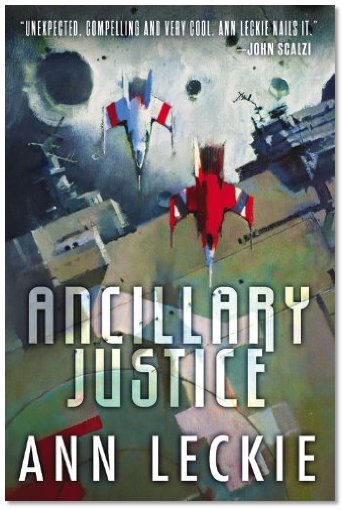
I don't know about you guys, but the holidays tire me out. December went by in a flash, and by the time New Year's rolled around I found myself lacking the energy to do anything but lie on my bed and read, in which pursuit I spent a glorious New Year's weekend. Immersed in the fabulous Ancillary Sword by Ann Leckie, and then by the various worlds presented in George R. R. Martin's Rogues anthology, I got to thinking a lot about worldbuilding.


For a speculative fiction writer, worldbuilding is one of the most important parts of structuring the story you want to tell. You have to find a good balance between giving the reader a complete picture of the world you've imagined, and giving them so much information that the story gets lost inside the encyclopedia you're dumping on them. It's really easy to fall down on either side of that line, and the authors who walk it best manage to deliver their worldbuilding so casually you barely realize it's happening.


In that vein, I compiled a list of a few of the best examples of worldbuilding in fantasy and sci-fi, both as a reference for myself as a writer when I find myself mired in the hows and whys of my worlds, and for everyone else to enjoy and hopefully add to.


the Imperial Radch series by Ann Leckie - I imagine it's really hard to find a way to explain "My main character used to be a ship with thousands of bodies all controlled by her AI, but now all but one of the bodies are dead and she has to pretend to be human." But Leckie manages to do just that, and to give her narrator a place within a detailed and politically complex sci-fi universe, without infodumping even once. Some might argue she errs on the side of obscurity, and there were certainly places at the beginning of the book where I was a little confused, but the picture comes together at a slow but steady pace, and the final product is seriously, seriously cool.

When Gravity Fails by George Alec Effinger - While the plot in this book isn't the tightest one might wish from a murder mystery, the worldbuilding is outstanding. The city of the Budayeen is so vivid I can picture it in my mind even years after having read the book, same goes for the technology and weapons described. It's a textured blend of a place, it feels real even though it's unmistakably full of sci-fi elements. This is a case where the world is built effortlessly through the narrator's voice, as he travels through the social strata of the city trying to catch a murderer; you don't even realize how much of the picture is painted in until you step back and look at it from a distance.


the Gentlemen Bastard sequence by Scott Lynch - This is my favorite book series being published right now, full stop. Lynch takes a fairly straightforward approach to worldbuilding, but he's clearly given his world an insane amount of thought, and there are just as many passages of description as there are casual allusions to things that help fill in the picture around the action. Camorr itself, the city setting of the first book, is like a Renaissance-era Venice if it were made by aliens and populated by the Mafia. But every city we've visited with Lynch, from Tal Verrar to Old Theradane, just straight-up feels like a real place. He knows just what details to give to make you feel the cobblestones under your feet and taste the wine on your tongue.


Dune by Frank Herbert - One of the greatest examples of sci-fi where the world is built through context. There's almost no info-dumping in Dune, just a lot of contextual allusions to important things that allow the reader to put together a complete picture of the worlds we visit. Like concentric circles, Herbert builds the Atreides family, the way they integrate with the Fremen society, the Fremen's place on Arrakis, and Arrakis's place in the universe, so casually you hardly realize he's doing it. Getting a POV on the Harkonnens, and the excerpts from Princess Irulan's writings, rounds out the bits we'd miss by sticking just with Paul's POV.


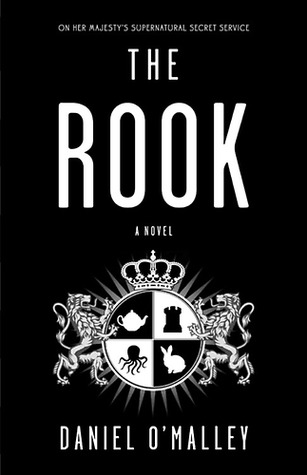
The Rook by Daniel O'Malley - In a story where your main character is a member of the British Supernatural Secret Service, coworker of vampires and dreamwalkers and sociopaths who inhabit four bodies at once, how to avoid the infodump factor? Easy-- make your character lose her memory and have to learn everything about her world all over again. I love epistolary fiction to begin with, and I really loved that The Rook is told half through letters from Myfanwy to her future memory-wiped self. Though there are sections that are heavy with information, it doesn't feel egregious because it's new to the character as well as the reader. Also, the inner structure of the agency is both brilliant and intuitive, so it's not hard to understand how the pecking order works.


the Harry Potter series - Similar to The Rook, a really great way to introduce your world to your audience is through the eyes of a character to whom everything is totally new. How better to ease us into the Wizarding World than by taking us, literally, to school there? It's pretty brilliant that Harry's new to being a wizard entirely, and not just new to the idea of Hogwarts-- his newbie status allows for continued worldbuilding throughout the series. My favorite use of this is probably in Book 5 when we learn about the Ministry's inner workings and St. Mungo's Hospital.


Boneshaker by Cherie Priest - Really, this entire series builds an incredibly complex and colorful world, but I've only read two of the five books in it, so I'll talk mostly about the first in the series because that's what got me hooked. I love alternate history, and the best alternate histories take well-known people and events and mash them up with the fantasy elements that make them new. We all know about the Gold Rush, but using that as a path to a zombie apocalypse (albeit a contained one) is a twist I would never have seen coming.


Any other examples of stellar worldbuilding you think I've left off the list? Shout 'em out in the comments, and I'll see you next time.

--emily

03 September, 2014

Fuck the Higher Bird: A Review of 'Yoga Bitch' by Suzanne Morrison

More often than not on this blog, I've reviewed genre fiction-- that is, sci-fi or fantasy or something other than straight-up "literary" fiction. What I've never done is review nonfiction, simply because I don't, as a rule, read nonfiction. David Sedaris notwithstanding, my experience with other people's memoirs has more often than not been an exercise in eyerolling at the self-aggrandizing navel-gazing contained therein. Memoir is what people write when they think they're more special than they are.

When I went to the AWP conference in Seattle this past February, I went to a panel about book reviews where the editors of several review publications offered advice on how to make reviews pop. The best piece of advice I got was that a review shouldn't be a summary of the events of a book-- it should frame the book in context. Simply laying out the events of the book isn't enough; you can get that by going to Amazon. A good review tells a reader not if the book is good or bad, but why it's relevant.

It was also at AWP that I, on a whim, attended a panel on humor in memoir, and got to hear Suzanne Morrison read from her book Yoga Bitch. When I tell you I laughed so hard I cried, I'm not exaggerating. Her sarcasm, her unflinching honesty about her own inner failings, and most of all, the unbelievable story of a group full of grown adults who willingly drink their own pee, had me hooked.

26 August, 2014

A Guide to Recognizing Your Geeks

goodbye old school...
Remember "Revenge of the Nerds?" It's a terrible movie, not one I'd recommend watching if you haven't suffered through it already, but it stands as a testament to the Bad Old Days when cool was king and "nerd" was one of the worst insults to hurl. The film presented what was, then, a novelty idea: that geeks can be good for more than shoving into lockers.

That idea isn't so novel anymore. Over the past few years, geek has actually become chic. Or at the very least, it’s got a certain cachet. The days where dweebs were automatically equated with Steve Urkel are over, and for those of us who spent elementary school defending our prized Boba Fett lunchboxes, we’re now enjoying a bit of blowback from the je ne sais quoi of Chuck, Katniss, and the rebooted Star Trek franchise.
...hel-LO new school.

It's not just coming from one corner anymore, either. Glee lifted choir kids out of the social-strata underworld; supernatural creatures like vampires, werewolves, and Misha Collins are all over late-night TV; and the ubiquity of the Marvel films— not to mention the collective dazzle from the MCU's star-studded cast— has made it gauche not to know your Avengers on sight.

So what's separating the geeks from the muns, these days? Some might argue we've got to step up our game to keep our street cred. In the wake of the Lord of the Rings movies, I wasn't the only person I knew willing to go to any lengths necessary to prove I'd been a fan before the movies— in fact, my fervor was outshone by people two and three times my age, from my father to my college advisor, who actually offered a seminar on Tolkien in 2004. In those brief and brilliant years when we were inundated by a new Rings or Harry Potter movie every time we turned around, it became the shibboleth of nerd culture to know "how it really happened", to toss out pieces of trivia like Quaffles through a goal hoop, each of us hoping to rack up the highest score.

And I get it— I really get it. When I was little, books were my best (sometimes my only) friends. Frodo wasn't just real to me, he was important. Knowing him was important, and discovering someone else who felt that way about him was the best kind of surprise, an instant recommendation of someone's character. It was how I learned who was like me and who wasn't— who it was safe to be myself around— who I could trust. Geek was my identity, and when you own an identity that slaps you firmly onto the margins of mainstream society, you come to terms with the fact that most people will never know that part of you. You just can't trust them to understand it; you'd rather hide it than have it denigrated.

better question: who doesn't like debating
the finer points of Westerosi politics?
So as the curtains have been drawn further and further back, the titans of geek media given spit and polish for presentation to a wider audience, we nerds have found ourselves swimming in a much more crowded pond. All of a sudden, knowing who Frodo Baggins is isn't a barometer for geekdom, because everybody knows. Dropping a joke about Thor's hammer isn't an indicator of who's a geek versus who just wandered into a showing of the Avengers by mistake. You can no longer automatically trust that you've found a kindred spirit in someone wearing a Winter is Coming t-shirt. So how do you tell who it's safe to debate the finer points of Westerosi politics with, and who will look at you like you're nuts for thinking that much about it? The sieve has to get finer; the tests have to get harder. Are you really a geek, or are you just pretending?

It feels like an important distinction to make. Because in labeling ourselves different, we set ourselves up as a foil to that which we're different from. The opposition is right there in the title— Revenge of the Nerds. Sometimes it can feel that dire— that we do need revenge for all the slings and arrows we've weathered defending our right to enjoy things unironically, without caring if it's cool. And reading a Red Wedding freakout on Facebook from someone who mocked you mercilessly for reading fantasy books in high school can be— well— a little galling.

Right now we're at the epicenter of the earthquake, the blast point where counterculture becomes culture. And I'll be the first to admit it's not pretty. Sharing sucks; I'm an older sister, I know. It feels like something's being taken from us, that our stories are no longer our own, and in order to keep our identity intact we have to pull up the stakes and retreat further into geek territory, rebuild our pylons and siege towers to keep the non-geeks out. We can still use our geekdom as a stick to draw a line in the sand; it can still be us versus them.

But that's a bat'leth that cuts both ways. Nobody can absorb all facets of geekdom— there just aren't enough hours in a day. I can talk Star Trek and fantasy literature for days, but the number of video games I can hold a conversation about can be counted on one hand. So does that mean I'm not a "real" geek? Does the fact that I'm 30 and only just contemplating buying my first game system somehow make me "less" than people who've been using controllers as long as they've been using silverware?

There's been a lot of talk lately about gatekeeping in geek culture as it relates to women— about girls who go into comic shops and get awkward-stared off the premises, women who go to cons and get harassed for their cosplay, women who get quizzed and challenged by whiny men who feel threatened by the presence of women in "their" geek space. I know I don't need to state that that's bullshit; we can all smell it from where we're sitting, and we know enough to avoid stepping in it.

But if I'm being honest, it's not okay to do to anyone. Who cares when someone became a fan of something? If you were lucky enough to be born with a Silver Age spoon in your mouth, good for you. But we geeks put our pants on one leg at a time just like everyone else. Who are we to judge whether someone's interest is "real"? Who are we to stand with our arms crossed and say "Not you, you are not worthy, you shall not enter here"? We're not Gandalf— we don't get to say who shall or shall not pass.

Fantasy, sci-fi, video games, comic books, they're all ways of telling stories, the purpose of which is to talk about our experiences of being human. I've talked a lot about fandom and how it provides a haven to people who are underrepresented in media— that fandom is where I go to find people like me, whether on the pages of fanfiction or in conversation with other fans. That's what draws all of us to partake in geek culture, isn't it? Sharing our experiences of what a book or movie or comic or game meant to us. Sharing. Communicating. Interacting with people who are like us.

Pardon me for waxing a little Professor X here, but we— we geeks— have more in common with the rest of the world than we might think. Peaceful coexistence with the uninitiated in a geek-oriented space is possible— and not just possible, it's happening already. So maybe this is where we find our common ground: in the exposure of our touchstones to the public eye, in not only allowing, but inviting non-geeks to experience them along with us. In welcoming the newcomers, not excluding them.

Who knows— maybe in being a guide instead of a gatekeeper, you'll help someone discover they've had a Browncoat inside them this whole time. You'll be the one that opened that door into Narnia, the giver of that Green Lantern ring. The analogies I could make are endless. The point is, we all know the experience of reading a book or watching a show and feeling the tops of our heads lift off as that spark in our brain catches and turns into an inferno of excitement. We know it, and we live for it. It's the best feeling ever. And take it from me, watching someone else experience it is like a contact high— and who wouldn't want to be the bearer of that wondrousness?

Look at it this way— this pervasiveness is the nerd's ultimate revenge. We're everywhere now, and we're turning "them" into us without even warning them first. Instead of the geek taking off her glasses to reveal the "normal" girl hidden inside, we can be responsible for the opposite transformation. It's the ultimate comeback to the challenge of hipster culture, which asks us to love things only ironically, from a safe emotional distance.

Screw that. Reject the idea that by sharing our culture there's less of it to go around. Stop worrying, and learn to love the spotlight. Love your stories, share your stories, and make other people love them too. Those people are our people now. And if the proliferation of the nerd herd doesn't sound intensely awesome to you… are you sure you're really a geek?

06 August, 2014

Guardians of the Galaxy: A-Holes, Whores, and Things You Just Don't Say to Your Friends

Marvel used the word "whore" in one of their movies, and I'm really not okay with it.

Let me back up.

When I was sixteen, I called my best friend a whore, and it ended our friendship.

Okay… let me back up some more.

30 July, 2014

'Ghosts of Tupelo Landing' by Sheila Turnage

Starting the sequel to a book I loved is always a bit of a risk. But it was one that paid off with Sheila Turnage's Ghosts of Tupelo Landing, the sequel to last year's sidesplitting Three Times Lucky. Despite the volume of books I read, there are few that can make me laugh out loud without a care for how many funny looks I'm getting from commuters or coworkers around me. But like its predecessor, Ghosts of Tupelo Landing had me chortling on the regular. Mo's voice is so strong, and the humor comes in many flavors, from the bait-and-switch ("Connoisseur", I whispered. "French for 'know-it-all.'") to rueful self-deprecation (The problem with having a temper is you find out what you're going to say at the same time everyone else does.). I can't help but recognize a bit of the fiery troublemaking kid I was in Mo, but even if I didn't have that soft spot, I'd still be laughing my ass off.

I trusted Turnage not to try to "one-up" the plot of the first book (one of my biggest peeves about mystery series) and she didn't disappoint. This time instead of a murderer on the loose, the real threat is to the livelihood of Mo's nearest and dearest, and in a way she can't fix just by figuring out whodunit. This is only tangentially a ghost story, with the title referring more to the shades of the town's past than to the actual ghost Mo and Dale are chasing. The overall feel of the book is of things coming full circle-- an out of town boy coming back to live with his grandfather, schoolchildren learning about their town's history by interviewing their elders, a historic building given new life through the town's collective effort. It's a deft way to frame the characters' development as they take on bigger challenges, both practical and personal.

Change is a common theme in middle-grade fiction, as most of its readers are already hurtling into adolescence at breakneck speed. Mo is growing and changing-- it's no coincidence that for the first time we see her in school-- and the scope of her world is growing too, as she turns her outward "Upstream Mother" focus inward to the people around her, and her place among them. The mystery was harder to solve, too, as it involved navigating the often confusing world of adult emotions and motivations. But Mo's facility for people (and for bullshitting her way out of sticky situations) helps her hold her own against bitter bootleggers and grouchy grannies alike, keeping the story moving constantly forward.

But the biggest strength of this book is in its unquestioning acceptance of Mo's experiences, and how it refuses to compromise her agency as the storyteller. Whether or not the ghost of Nellie Blake is "real" is never even brought up-- Mo experiences her as real, and therefore so do we, the readers. It's part of what makes Mo such a great narrator and such a strong character-- her world is the world we live in while we're with her, and it's a colorful explosion that doesn't step outside itself for a moment. Turnage has said that when she first sat down to write Three Times Lucky, Mo emerged almost fully formed, her voice clear and distinct, and that solidity certainly translates to my experience as a reader. If only all characters-- especially all female characters-- were as complete in their humanity as Mo LoBeau.

I'm assuming Turnage will be putting out another sequel soon, only because I can't imagine saying goodbye to a character and a place I've come to adore so much after only two books. People often deride adults who read children's books (James Wood's recent invective, quoted here, springs to mind), but whatever your age, Ghosts of Tupelo Landing gets my full-throated recommendation to anyone who likes good writing or is in need of a good laugh.

Overall rating: 4.5/5 stars (rounded up to 5 for how much it made me laugh)
Geek quotient: 2/5 stars
Girl quotient: 5/5 stars
Gay quotient: 2/5 stars (Mo has a gay "uncle" who's a very positive role model in her life- normally I wouldn't give this two stars, but in a book for this age group it gets more weight.)

17 June, 2014

"Prince of Thorns" by Mark Lawrence

With no ado at all, I'm back! Shit's been crazy; I'm finally reading again, at last.

So, Prince of Thorns by Mark Lawrence. I have really mixed feelings about this book-- I'd been really excited to read it, but when I got into it I just... couldn't get into it.

A synopsis: When he was nine, Prince Honorous Jorg Ancrath watched as his brother was murdered and his mother raped and then murdered by villainous Count Renar's men. His father the king is a neglectful vicious jerk who refused to enact vengeance upon Renar in favor of using the murders as leverage to bargain a profitable trade agreement with him. Furious and betrayed, Jorg peaces out of home at age ten, and collects-slash-joins a bunch of thugs who then pillage their way across a bunch of kingdoms under his command, all with the ultimate goal of vengeance upon Renar and overthrowing his father to take the throne of Ancrath for his own. But there's more at play than just bloodlust; the Hundred Kingdoms are at war, and the closer Jorg gets to understanding how to win it, the more he starts to realize he has no idea what he's up against.

16 April, 2014

springtime... maybe?

The calendar says it's spring, yet when I woke up this morning there was a crust of snow on the daffodils in my front yard. I'll say again what I've said several times this year: Go home weather, you're drunk.

I just wanted to pop in and say hello, and apologize for the long silence. I hit a little crisis of faith toward the middle of February, in writing a few reviews and realizing I wasn't sure what I was trying to say, which led to this anxiety spiral of questioning why I was reviewing books, was anyone even reading my reviews, and if not, what the point of it all was.

The lesson here is clearly that Seasonal Affective Disorder is not to be underestimated.

Now it's spring (sort of) and I'm working on finishing the draft of that pesky novel that I started back in November, and trying to get back on the reading horse after a few months spent rereading the Harry Potter series and a boatload of Captain America comics. Also, I'd just realized that due to some weird glitch, my last blog layout was not letting you actually read more when you clicked the "Read More" link in my breaks, so the pretty layout has been swapped out in favor of something more basic and functional. Snazzing it back up will be a project for another time. Apologies if anyone was trying to read my past posts and couldn't make them work!

The point is, I'm reading again, which means you can, I hope, expect to see some reviews popping up here again in the near future. Probably shorter and less rambly than my previous sort, but who knows. I'm still working this out as I go.

Thanks for still being along for the ride, readers. Till next time!
♥ emily